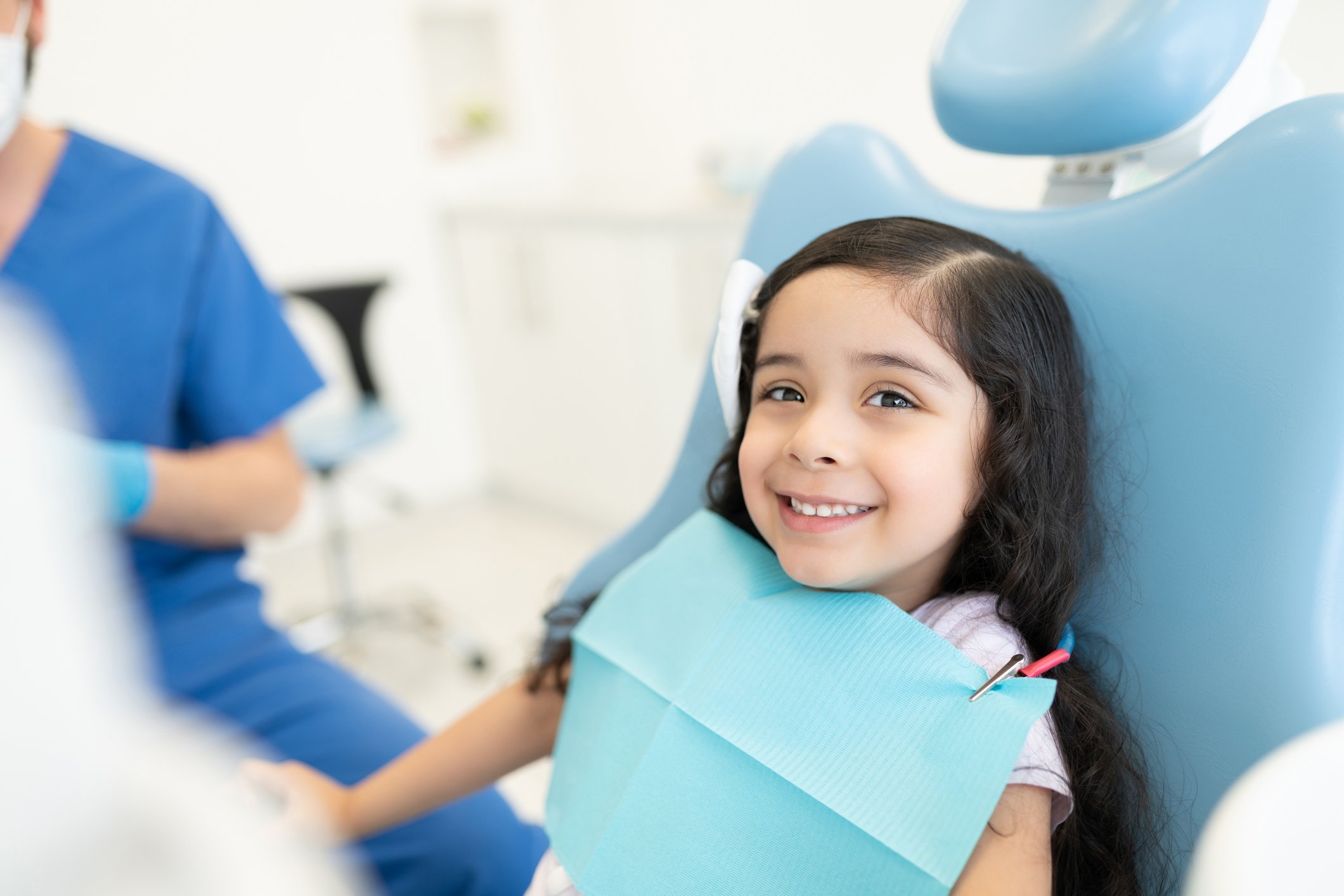

Children’s Dentistry
First Visit
A child’s first dental visit is an important step in establishing good oral hygiene habits. Making the experience enjoyable can set the foundation for a lifetime of positive dental health.
-
The American Academy of Pediatric Dentistry recommends that a child's first dental visit should occur at around 1 year of age or within six months after the first tooth erupts - whichever comes first.
-
Speak to your child about the dental visit in a positive and reassuring manner. Avoid using scary or negative language. Read children's books about dental visits to your child to help familiarize them with the process.
-
The first dental visit is usually brief and involves an introduction to the dentist and the office. The dentist will examine your child's mouth and teeth, checking for any potential issues. The visit may also include a gentle cleaning and polishing of the teeth.
-
Encourage your child to have a positive attitude by offering praise for good behavior during the visit. Consider bringing a comfort item, such as a favorite toy or blanket, to help your child feel more at ease.
-
Allow the child to meet the dentist and dental staff before the examination. This helps build trust and familiarity.
-
The dentist will provide guidance on proper oral care at home including brushing techniques, the importance of regular dental checkups and healthy dietary habits.
-
If you have any concerns or questions about your child's oral health be sure to discuss them with the dentist during the visit.
-
Schedule regular follow-up appointments as recommended by the dentist. These visits are crucial for monitoring your child's oral development and addressing concerns early on.

Losing Baby Teeth
Losing baby teeth, aka primary or deciduous teeth, is natural. It is an exciting part of a child's development, signaling the growth of permanent teeth and the progression toward a mature smile.
-
The process of losing baby teeth typically begins around the age of 6 and continues until age 12 or 13. The exact timing can vary widely among individual children.
-
The first baby teeth lost are usually the lower central incisors (bottom front teeth), followed by the upper central incisors (top front teeth). The pattern continues with the lateral incisors, canines, first molars and second molars.
-
Before a baby tooth is ready to come out, the roots gradually dissolve. This process is called root resorption. As the roots disappear, the tooth becomes loose. The surrounding tissues help with the natural shedding process.
-
It's common for children to experience some discomfort or notice a wiggling sensation in a loose baby tooth. This is a sign that the tooth is ready to come out.
-
In most cases, baby teeth fall out on their own without the need for extraction. It's essential not to force a tooth out prematurely, as this can lead to injury or complications.
-
Maintaining good oral hygiene, by gently brushing and flossing, can promote healthy gums during this transition.
-
Permanent teeth usually begin to erupt shortly after the baby teeth are lost. The process of eruption continues into adolescence and early adulthood.
-
While losing baby teeth is a natural process, regular checkups are essential to monitor the progress of your child's dental development. Dentists can provide guidance on oral care and address any concerns about the transition from baby to permanent teeth.
-
If a baby tooth is not falling out on its own or if there are concerns about the eruption of permanent teeth, it's advisable to consult with a dentist.
Sealants
Preventive sealants protect children’s teeth from cavities. Sealants are applied soon after permanent molars come into the mouth. Around 6 years old for 1st molars and 12 years old for 2nd molars. Sealants decrease the incidence of cavities but do not eliminate them, so good oral hygiene habits and regular dental visits are still necessary. Sealants are ineffective if cavities are already present.
Orthodontics
Orthodontics is a branch of dentistry that specializes in the diagnosis, prevention and treatment of dental and facial irregularities, primarily involving the alignment of teeth and jaws. The goal of orthodontic treatment is to achieve optimal oral health, function and appearance of the smile.
Malocclusions, or improper bites, are common orthodontic issues. These can include problems such as overcrowded or crooked teeth, overbites, underbites, crossbites and gaps between teeth.
Treatment Options
Treatment options include clear aligners (such as Invisalign), retainers, headgear, palatal expanders and braces, which consist of brackets attached to the teeth connected by wires.
Treatment Duration
Treatment duration varies based on the complexity of the case. Treatment can range from several months to a few years.
Age for Treatment
While orthodontic treatment is often associated with adolescence, people of any age can benefit from orthodontic care. Early orthodontic intervention, typically between the ages of 7 and 14, can help address issues when the jaw and facial bones are still developing.
Orthognathic Surgery
In some cases, orthodontic treatment may be combined with orthognathic surgery to address severe jaw discrepancies or facial asymmetry. This surgery is performed by an oral and maxillofacial surgeon in collaboration with an orthodontist.
Retention
After active orthodontic treatment, a retainer is often prescribed to help maintain the newly achieved alignment. Retainers are usually worn for a specified period, while the orthodontist monitors progress.
Benefits
Straightening teeth not only enhances aesthetics but also contributes to better oral health. Properly aligned teeth are easier to clean, reducing the risk of tooth decay and gum disease. Additionally, orthodontic treatment can improve bite function and overall jaw function.
Consultation
If you or your child has orthodontic concerns, scheduling a consultation with an orthodontist is the first step. The orthodontist will conduct a thorough examination, including X-rays and impressions, to develop a personalized treatment plan.